Welcome to the forefront of conversational AI as we explore the fascinating world of AI chatbots in our dedicated blog series. Discover the latest advancements, applications, and strategies that propel the evolution of chatbot technology. From enhancing customer interactions to streamlining business processes, these articles delve into the innovative ways artificial intelligence is shaping the landscape of automated conversational agents. Whether you’re a business owner, developer, or simply intrigued by the future of interactive technology, join us on this journey to unravel the transformative power and endless possibilities of AI chatbots.
Artificial intelligence has spent the last few years creeping into our daily routines. It writes emails, drafts reports, and helps us plan trips. But at SXSW 2026, a panel titled “Meet Your New Work Team: AI, Chatbots, and the Workplace” made one thing clear: the next phase of this technology is already here. AI chatbots in the workplace are no longer experimental tools. They are becoming coworkers.
Industry leaders from companies like Indeed, Haut.AI, and WSP gathered to discuss how artificial intelligence is reshaping modern offices. The conversation ranged from hiring trends to workplace culture. Yet the most striking theme was simple. The modern office may soon include a new teammate, and that teammate is an algorithm.
Many companies are already embedding AI tools into everyday operations. Job platforms, customer service systems, and internal communication tools now rely on AI chatbots to streamline work.
Matthew Jensen, Global Head of Government Relations and Public Policy at Indeed, explained how chatbots are already assisting job seekers and employers. Instead of simply typing a job title into a search bar, users can now ask AI tools more complex questions. They might ask about career paths, salary expectations, or what skills they need for a new industry.
The goal is to improve the match between employers and candidates. When workers find jobs that better match their skills and expectations, companies see stronger retention and productivity. In other words, the chatbot is acting as a digital middleman between two sides of the labor market.
For employers, these tools can also provide insight into hiring trends and skill demands across entire industries. That kind of information once required hours of research. Now it can arrive instantly through AI-powered systems.
Despite common fears about automation, several panelists emphasized that AI tools often expand human capabilities rather than replace workers.
Konstantin Kiselev, CTO and co-founder of Haut.AI, described how artificial intelligence helps dermatologists analyze large sets of clinical images. The technology processes data at a scale that would overwhelm human researchers. Yet doctors still validate the results and guide the analysis.
The same pattern is appearing across many industries. AI handles repetitive tasks and large data sets. Humans focus on interpretation, judgment, and decision making.
That dynamic is creating what some panelists called a new type of professional. Instead of performing narrow tasks, workers increasingly act as supervisors and interpreters of AI-generated output.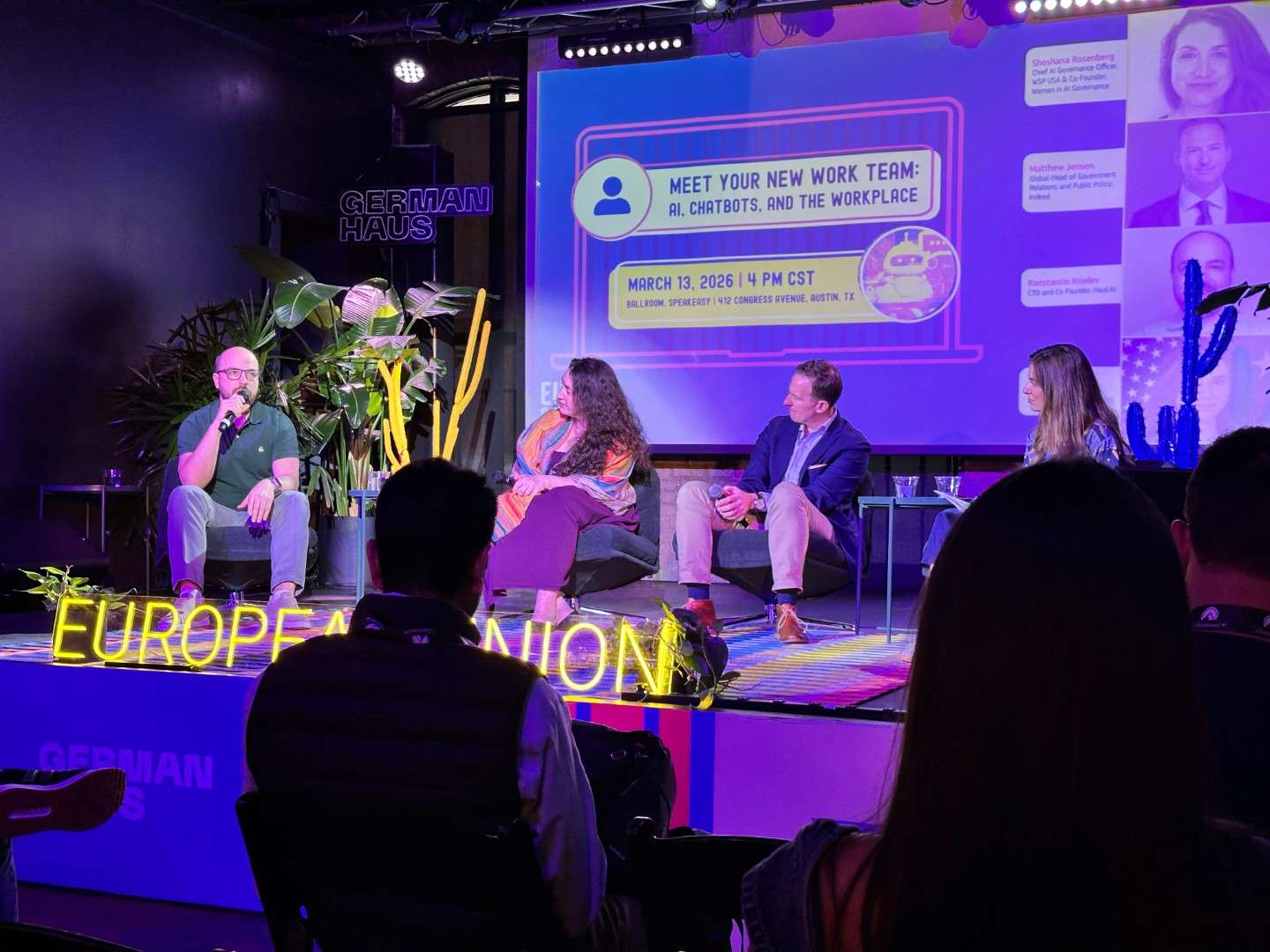
Technology rarely changes only how we work. It also changes how we interact.
One lighthearted moment during the panel highlighted this cultural shift. The moderator joked about whether it might eventually be considered rude not to say “hello” or “thank you” to workplace chatbots.
The comment earned laughs from the audience, but it reflects a deeper question. As AI tools become more conversational and integrated into daily workflows, workers may begin to treat them less like software and more like collaborators.
This shift raises interesting questions about etiquette and trust. If an AI assistant helps you draft a presentation or analyze a dataset, do you acknowledge it as part of the team? Or does it remain invisible infrastructure behind the scenes?
As artificial intelligence spreads across the workplace, panelists agreed on one important point. Human skills are not disappearing. They are simply becoming more valuable.
Communication, reasoning, and critical thinking remain essential. Workers must evaluate AI-generated information and decide how to use it. That requires experience and judgment that machines cannot easily replicate.
For younger workers entering the labor market, the challenge may be learning how to collaborate effectively with AI tools. Those who understand how to guide, question, and verify AI output could gain a major advantage.
Artificial intelligence is still evolving, and no one at SXSW claimed to have all the answers. Yet the direction of travel seems clear. AI is moving from the background of software systems to the center of daily work.
The future office may not look dramatically different on the surface. People will still attend meetings, write reports, and collaborate with colleagues. The difference is that an invisible partner will be present in nearly every task.
That partner will analyze data, draft ideas, and provide instant information. Sometimes it will be helpful. Sometimes it will be wrong. But it will almost certainly be part of the team.
Whether workers welcome that new coworker or remain cautious about its influence is a question that will shape the next decade of work.
At first glance, the title I Love Boosters …
