Welcome to the forefront of conversational AI as we explore the fascinating world of AI chatbots in our dedicated blog series. Discover the latest advancements, applications, and strategies that propel the evolution of chatbot technology. From enhancing customer interactions to streamlining business processes, these articles delve into the innovative ways artificial intelligence is shaping the landscape of automated conversational agents. Whether you’re a business owner, developer, or simply intrigued by the future of interactive technology, join us on this journey to unravel the transformative power and endless possibilities of AI chatbots.
For years, creator analytics have mostly answered one question: what happened after you posted?
Facebook now wants AI to help answer the next one: what should you do about it?
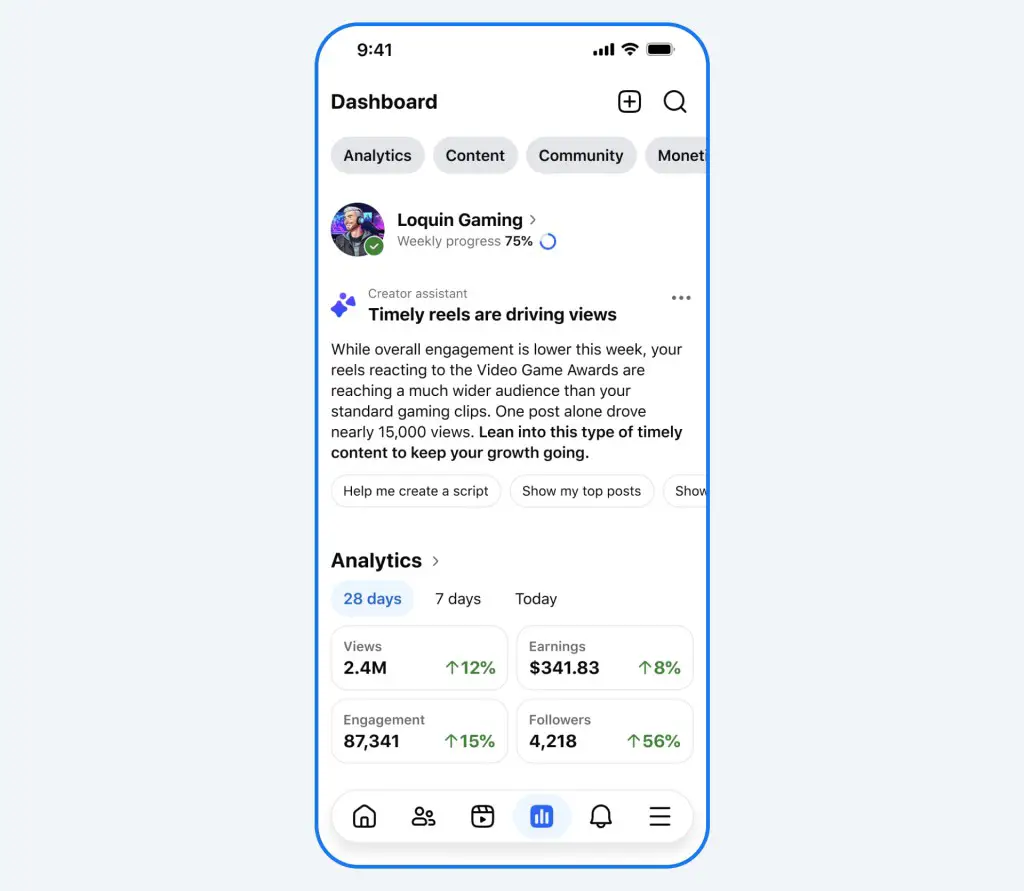
In a new Meta announcement, the company introduced Creator Assistant, a Facebook tool designed to understand each creator’s presence and help them take action to grow. The launch comes alongside an expansion of AI translations on Facebook, with Meta saying that more than half a billion people now watch AI-translated videos on the platform every week.
Those details belong together. Creator Assistant is not arriving in isolation. It is part of a bigger push to make AI sit closer to the everyday mechanics of posting, learning, translating, and growing on Facebook.
From performance report to creative prompt
The interesting part of Creator Assistant is not simply that it uses AI. It is that Meta describes it as personalized to a creator’s unique presence.
That wording matters. A generic AI chatbot can suggest captions, brainstorm post ideas, or summarize best practices. A creator-specific assistant suggests something more pointed: guidance shaped by the creator’s own content, audience, and activity on Facebook.
In practical terms, this moves Facebook creator tools away from static dashboards and toward interpretation. Instead of making creators dig through numbers and guess what the platform wants, Meta is building a layer that can explain, recommend, and nudge.
That is a meaningful shift for creators who already have too much feedback and not enough clarity. Most platforms give them signals: reach, retention, comments, shares, watch time, follower growth. The hard part is translating those signals into the next post. Creator Assistant is Facebook’s attempt to close that gap inside the platform itself.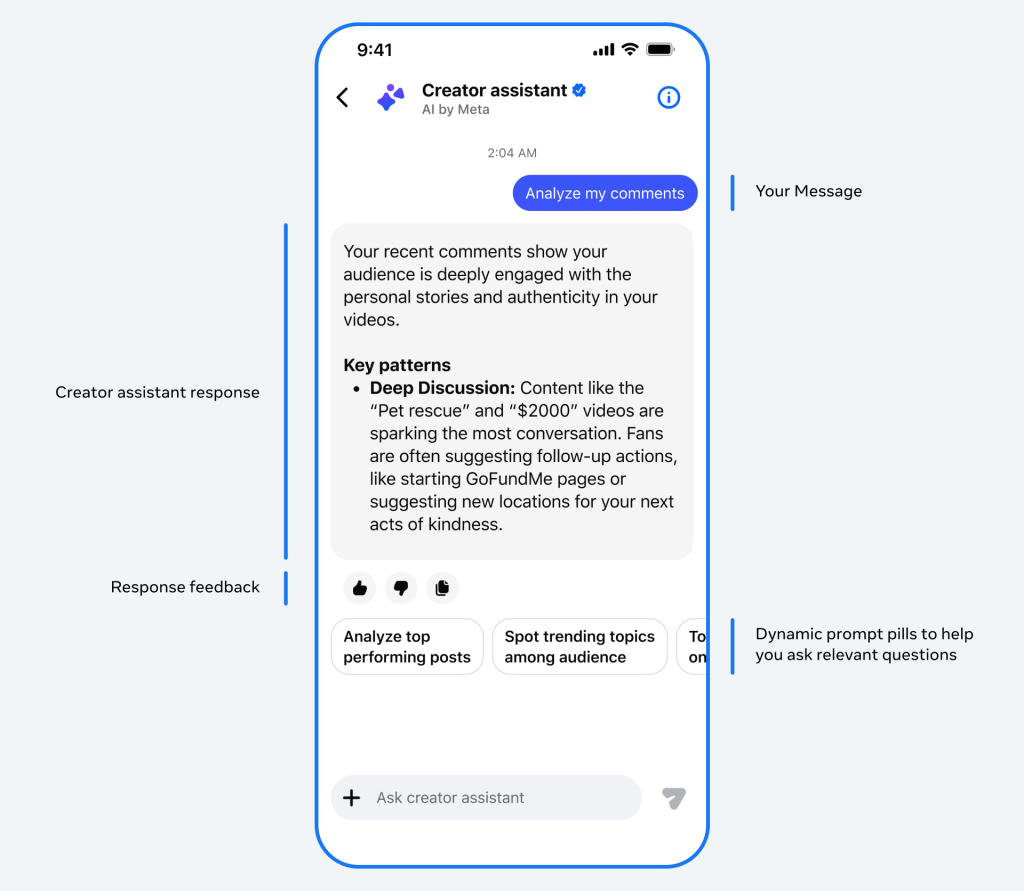
AI translation turns local content into a larger bet
The translation update makes the assistant story bigger.
Meta says AI translations on Facebook are expanding to more languages, and that over half a billion Facebook users watch AI-translated videos every week. That is not a small usage stat. It suggests that translated video is already becoming normal behavior for a very large audience, not a future experiment waiting for adoption.
For creators, this changes the value of a good post. A video made for one language or market can now travel further without the creator manually rebuilding it for each audience. If Facebook can combine translation, content guidance, and performance signals, it can make the platform feel more useful to creators who want reach beyond their immediate community.
But it also changes the creative brief. A creator is no longer just asking whether a video works for their existing followers. They may increasingly ask whether it can survive translation, whether the hook is clear without local context, and whether the format works when Facebook carries it into another language.
What this means for brands working with creators
For brands and marketers, the immediate takeaway is not simply “use AI.” It is that creator performance on Facebook may become more coached, more responsive, and more platform-shaped.
If Creator Assistant helps creators understand what is working and what to make next, brand partnerships may need to leave more room for that feedback loop. A rigid campaign brief that locks the creator into pre-approved lines, formats, and posting windows could underperform against content that adapts quickly to signals from the platform.
The AI translation stat also matters for international planning. If hundreds of millions of users are already watching translated videos every week, brands should think harder about creator assets that can travel. Simple visual storytelling, clear product context, and fewer jokes that collapse outside one language suddenly become more valuable.
This does not mean every creator campaign should be flattened into global sameness. It means the best creator work may need two qualities at once: a recognizable local voice and enough clarity to be understood when Facebook translates it for someone else.
The new creative pressure
There is a tension here, and it is worth naming.
Creator Assistant could make Facebook more useful for creators who feel overwhelmed by platform data. It could also make creative decisions more dependent on Facebook’s interpretation of what growth should look like. When the same platform distributes the content, translates the content, measures the response, and recommends what to do next, the advice is never neutral.
That does not make the tool bad. It makes the relationship more important. Creators will need to decide when to follow the assistant, when to challenge it, and when to protect the parts of their work that do not immediately show up as growth signals.
For Facebook, the strategic play is clear. If AI can help creators make better posts, reach more people across languages, and understand performance without leaving the app, Facebook becomes harder to treat as just another distribution channel.
The next advantage will not belong to creators who simply have access to more metrics. It will belong to the ones who know how to work with the machine interpreting those metrics without letting it take over the creative direction.
Also Read:
-
LinkedIn Is Using AI To Rethink How Your Feed Actually Works
-
Snapchat Turns Ads Into Conversations With AI Sponsored Snaps
-
Instagram Adds “AI Creator” Labels to Boost Transparency