Welcome to the forefront of conversational AI as we explore the fascinating world of AI chatbots in our dedicated blog series. Discover the latest advancements, applications, and strategies that propel the evolution of chatbot technology. From enhancing customer interactions to streamlining business processes, these articles delve into the innovative ways artificial intelligence is shaping the landscape of automated conversational agents. Whether you’re a business owner, developer, or simply intrigued by the future of interactive technology, join us on this journey to unravel the transformative power and endless possibilities of AI chatbots.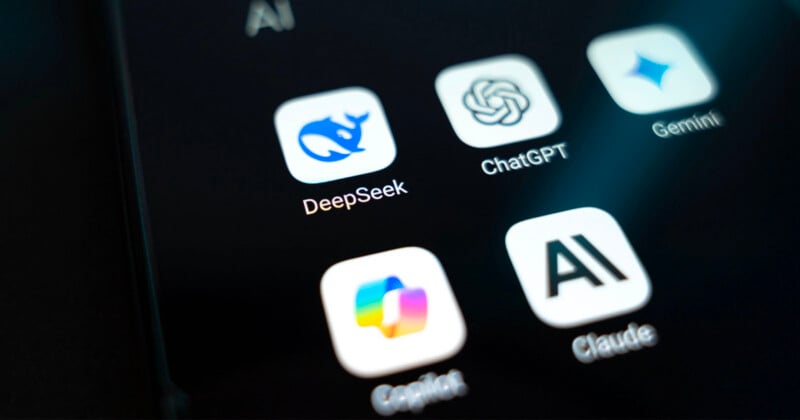
The still image is incredibly powerful; photographers know this better than anyone. And even in AI, it is the picture side of the product that is turbo-charging their gigantic businesses, according to a new report.
Per Android Authority, the fastest growth for apps like ChatGPT and Google Gemini comes when there is an AI image trend, like the Studio Ghibli one last year.
App intelligence provider Appfigures provided the data, essentially finding that image model releases correlate with large increases in downloads far more than upgrades to the chatbots.
Google Gemini has benefited from Nano Banana, which gained the AI app an extra 22 million downloads when the viral AI image generator was released. That was four times the usual rate of Gemini downloads.
It was a similar story for when OpenAI announced ChatGPT-4o, which was a big step forward in terms of the realism that AI imagery can achieve. The excitement surrounding the image generator resulted in approximately 4.5 times the normal number of downloads, far more than when the text generator was updated. 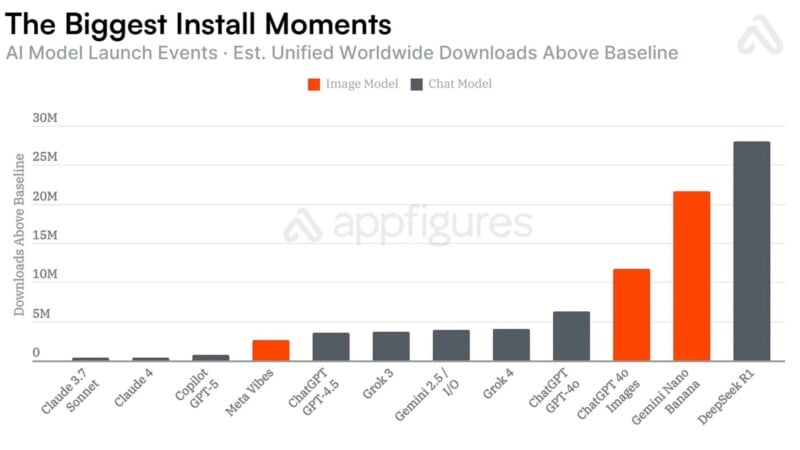
But there is a major difference between OpenAI and Google’s viral AI image generator movement: one was able to monetize it, and one didn’t as much. TechCrunch notes that ChatGPT generated $70 million from customers after it launched ChatGPT-4o’s images. In contrast, Google’s Nano Banana only grossed $181,000 — despite getting more downloads than ChatGPT.
The outlier is the Chinese AI firm DeepSeek, which blew up at the beginning of 2025. The release of DeepSeek R1 and its AI image model, Janus-Pro-7B, drove 28 million downloads. But the difference between DeepSeek and the others is that it was a relatively unknown app and exploded in popularity seemingly overnight. Part of the intrigue was that the app had been created at a fraction of the cost of traditional models. It prompted OpenAI to say that DeepSeek “may have inappropriately distilled our models.” This was ironic given that OpenAI built its entire company using copyrighted content it never asked permission to use. 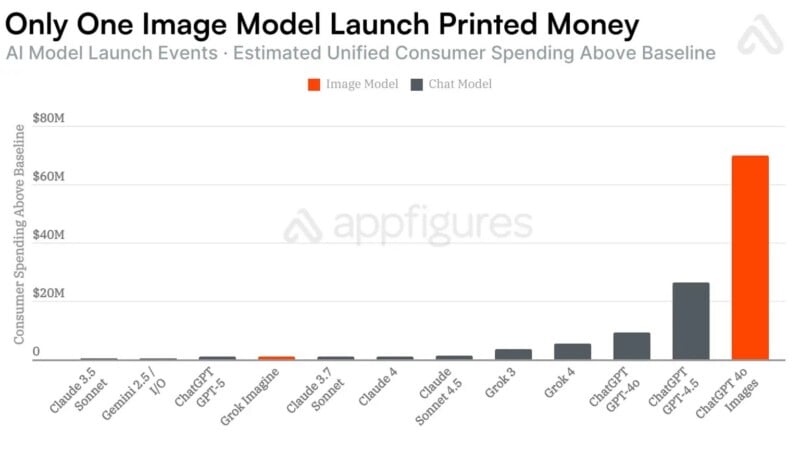
Even Meta got a bump after it released its AI video feed Vibes, adding roughly 2.6 million downloads.
“Visual AI looks like the best way to create mobile demand,” writes Appfigures. “But ChatGPT is still the app converting that demand into subscription spending. Gemini can make people curious. Meta can make them browse. DeepSeek can turn global attention into a download rush. But ChatGPT is the one turning a visual feature into money.
Image credits: Header photo licensed via Depositphotos.
Become a PetaPixel Member and access our content ad-free.
© 2026 PetaPixel Inc. All rights reserved.
